Control overtime.
Keep shifts covered.
an ITM Program
Built for the realities of fire department staffing with AI-assisted workflows that reduce manual effort and support faster staffing decisions.
How this supports your department:

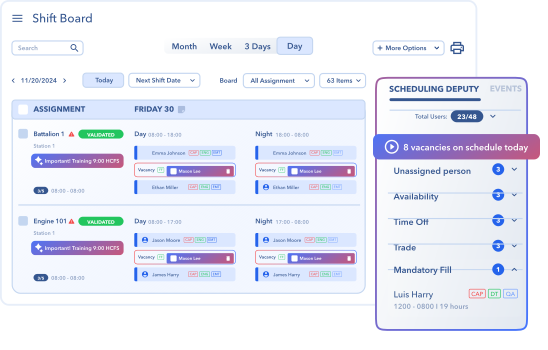
Explore Fire Scheduling Resources
.svg)

.svg)
.svg)
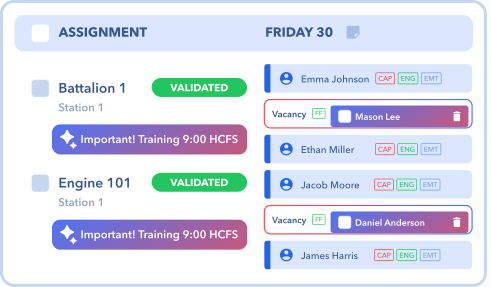
Register Now: See AI-Assisted Staffing in Action
Learn how modern fire departments are using AI to reduce scheduling time, control overtime, and eliminate manual workload while maintaining full control.
Key Takeaways:
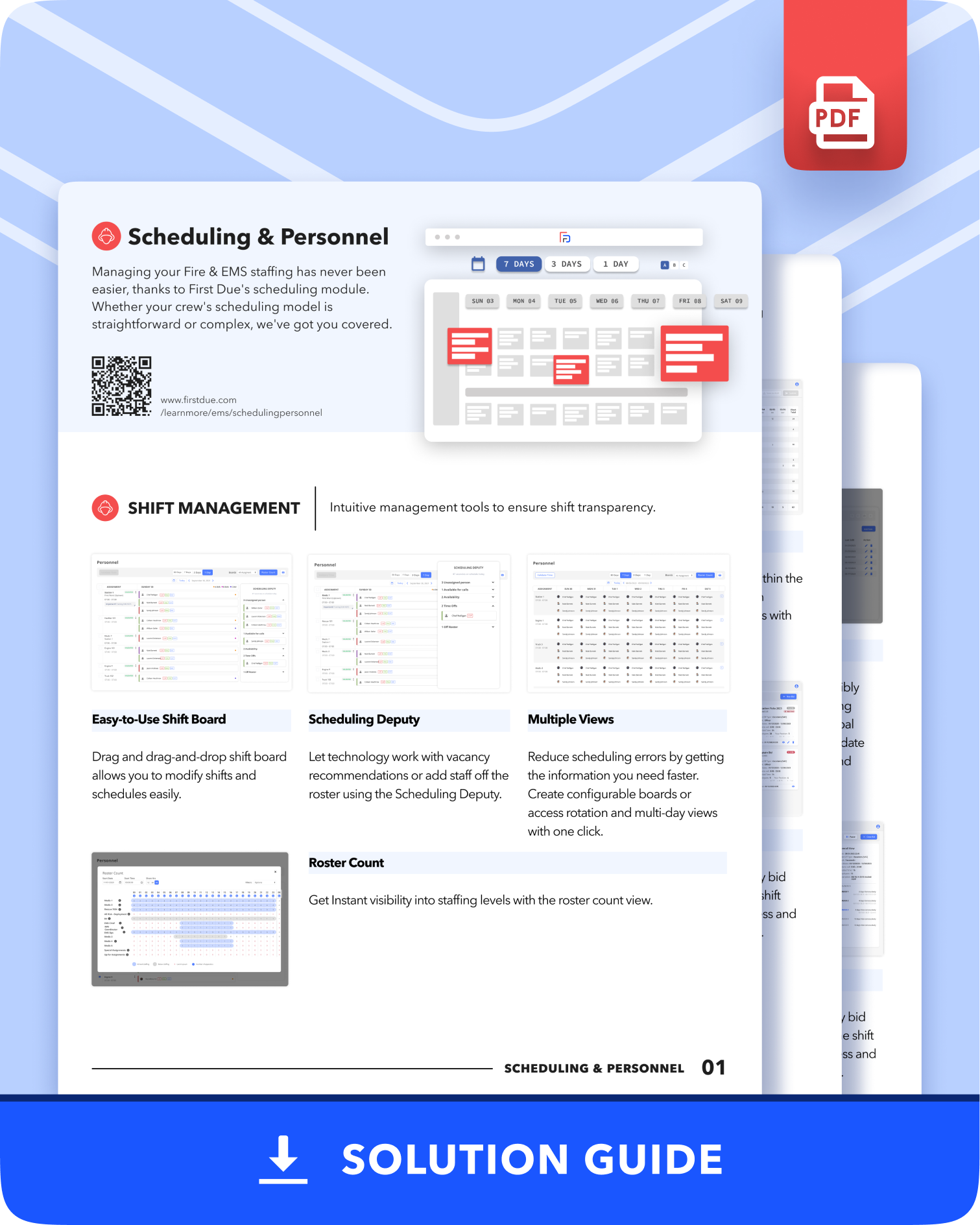
Keep Shifts Covered Without Increasing Administrative Work
eBook
Many fire departments are still managing staffing with spreadsheets, phone calls, and disconnected systems.
As staffing complexity increases and overtime becomes harder to manage, these workflows make it difficult to maintain coverage, apply department rules consistently, and keep up with daily scheduling demands.
This guide explains how departments are reducing scheduling workload while maintaining control over staffing decisions.
Evaluate Whether Your Scheduling System Can Keep Up
Audit Playbook
Scheduling decisions influence overtime exposure, compliance risk, and daily workload across the department.
Without clear visibility into staffing conditions, coverage gaps and overtime issues are often addressed too late.
This checklist helps you assess whether your current system can support modern staffing demands.
.png)
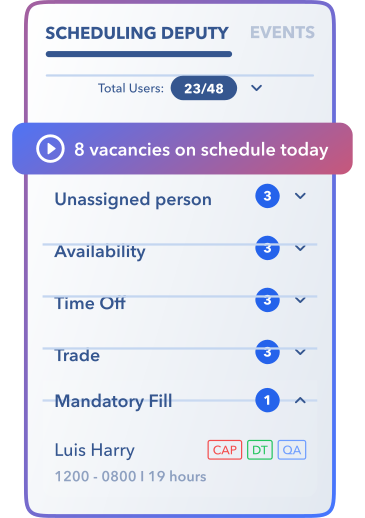
See How AI-Assisted Staffing Works in Practice
Staying Might Be
Scheduling plays a central role in staffing coverage, overtime management, and operational readiness.
This article breaks down how departments are reducing scheduling time while improving visibility and control.
Ready to Make the Switch?
Modern scheduling connects staffing, personnel, time tracking, and workflows in one place. This reduces administrative workload and allows leadership to focus on operations instead of process management.