Patient Care Doesn't Stop During Transport or at the Hospital Door (Part 6 of 9)


.svg)


The work does not pause for the drive. You are treating the patient the whole way to the hospital, and the information that supports that care should be moving too. For a long time it has not, because the radio report goes one way, the chart follows later, and the crew is left working from whatever the patient can tell them in the moment.
EMS hospital interoperability means real continuity of care, where information travels with the patient in both directions: history in, chart out, and outcomes back.
Care Continues En Route
During transport the priority is the patient, but the same window is when a hospital most needs to know what is coming and when a crew most benefits from knowing more than the patient alone can offer. Letting the receiving facility know what they have inbound, and giving the crew access to the patient's actual history, turns the drive into part of the care rather than a gap in it.
When Information Doesn't Travel With the Patient
Patients do not always give a complete picture, and it is often not deliberate, because they are frightened, in pain, or simply cannot remember. A history relayed from memory and a history in the medical record do not always match, and it happens often enough to matter: a patient reports one thing en route, then tells the emergency department something different, or the hospital's own records show a condition no one mentioned. Without a way to cross-check, the crew is documenting and treating on incomplete information.
Allergies are the sharpest example. If a patient cannot tell you what they are allergic to, you are exposed to introducing something that harms them, unless you can see their history for yourself.
Moving Toward Two-Way EMS Hospital Interoperability
The improvement is not a better radio report alone. It is a two-way exchange: pull the patient's history and medications from the health system to verify what you are being told, send your chart forward so the hospital is ready, and get outcome data back so your agency learns how the patient actually did. That last piece, outcomes coming back, is what turns EMS from a transporter into a member of the care team.
How First Due Helps
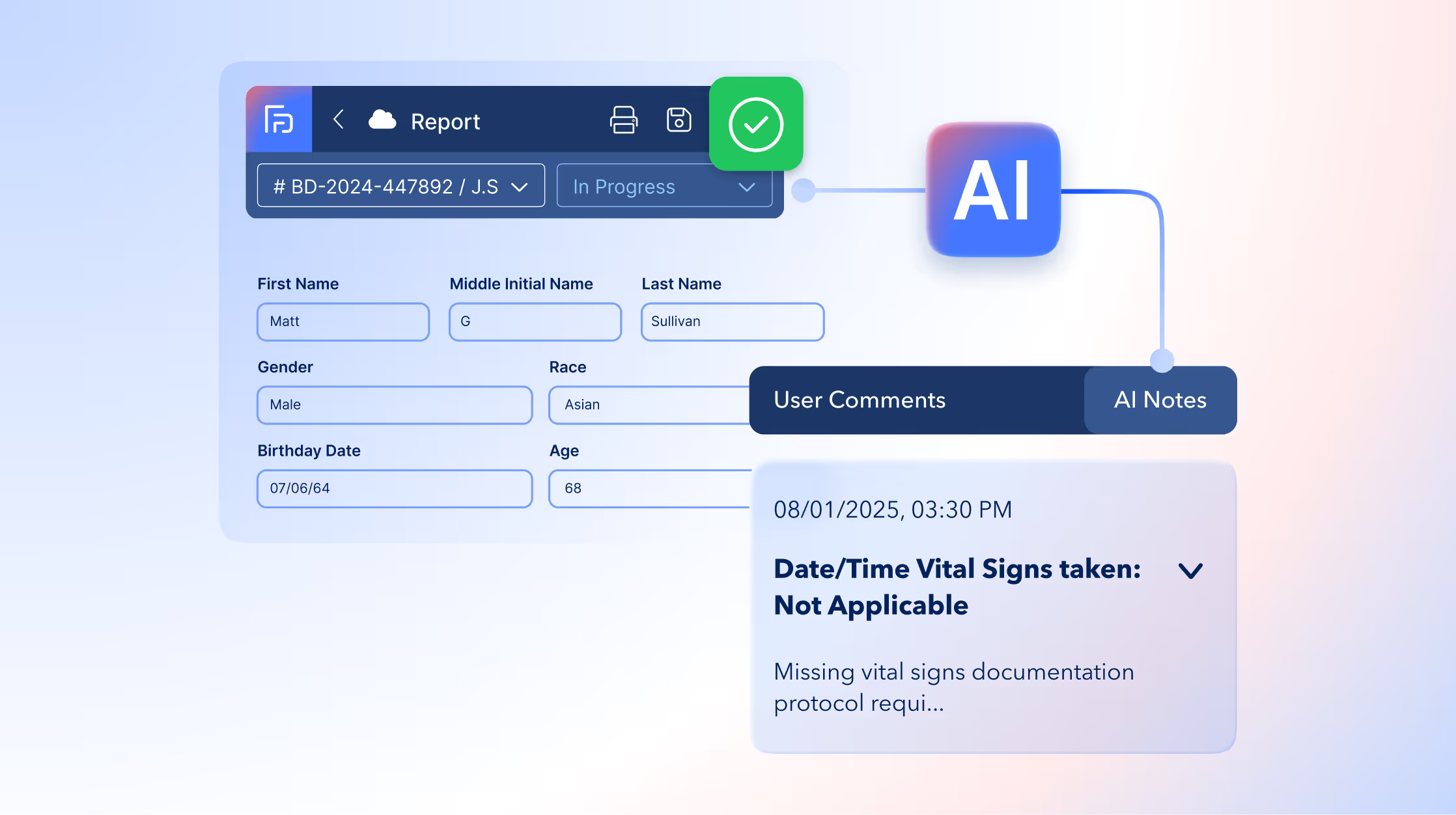
First Due's EMS platform supports real-time, two-way hospital interoperability, with Kno2 baked in. Crews can query a patient's past history, medications, and allergies to confirm what they are hearing, send the ePCR electronically into the hospital's EHR when the hospital wants it that way, and receive outcome data back after transport.
Because documentation is captured as the call unfolds rather than after the fact, that information can reach the receiving facility close to real time as you are bringing the patient in, not hours later. For time-critical patients such as stroke, STEMI, and trauma, where time is everything, that head start matters.
Better Handoffs Lead to Better Outcomes
The relationship between EMS and the hospital is usually a good one, and what two-way interoperability adds is speed and accuracy at the handoff, getting the right information to the nurse or physician quickly so care continues without a reset. That improves care in the ambulance and in the emergency department alike, and it reinforces something crews have always known: EMS is not moving a patient from point A to point B, it is part of the healthcare team working to improve that patient's outcome.
This is Step 6 of 9 in The Connected Journey, First Due's series on how one connected platform carries EMS from the schedule to the outcome, one step of the call at a time. Go back to Step 5: AI Documentation Starts at the Scene, Not Back at the Station. Read the next step, Step 7: The Call Doesn't End at Handoff: Protecting the Crew.
The work does not pause for the drive. You are treating the patient the whole way to the hospital, and the information that supports that care should be moving too. For a long time it has not, because the radio report goes one way, the chart follows later, and the crew is left working from whatever the patient can tell them in the moment.
EMS hospital interoperability means real continuity of care, where information travels with the patient in both directions: history in, chart out, and outcomes back.
Care Continues En Route
During transport the priority is the patient, but the same window is when a hospital most needs to know what is coming and when a crew most benefits from knowing more than the patient alone can offer. Letting the receiving facility know what they have inbound, and giving the crew access to the patient's actual history, turns the drive into part of the care rather than a gap in it.
When Information Doesn't Travel With the Patient
Patients do not always give a complete picture, and it is often not deliberate, because they are frightened, in pain, or simply cannot remember. A history relayed from memory and a history in the medical record do not always match, and it happens often enough to matter: a patient reports one thing en route, then tells the emergency department something different, or the hospital's own records show a condition no one mentioned. Without a way to cross-check, the crew is documenting and treating on incomplete information.
Allergies are the sharpest example. If a patient cannot tell you what they are allergic to, you are exposed to introducing something that harms them, unless you can see their history for yourself.
Moving Toward Two-Way EMS Hospital Interoperability
The improvement is not a better radio report alone. It is a two-way exchange: pull the patient's history and medications from the health system to verify what you are being told, send your chart forward so the hospital is ready, and get outcome data back so your agency learns how the patient actually did. That last piece, outcomes coming back, is what turns EMS from a transporter into a member of the care team.
How First Due Helps
First Due's EMS platform supports real-time, two-way hospital interoperability, with Kno2 baked in. Crews can query a patient's past history, medications, and allergies to confirm what they are hearing, send the ePCR electronically into the hospital's EHR when the hospital wants it that way, and receive outcome data back after transport.
Because documentation is captured as the call unfolds rather than after the fact, that information can reach the receiving facility close to real time as you are bringing the patient in, not hours later. For time-critical patients such as stroke, STEMI, and trauma, where time is everything, that head start matters.
Better Handoffs Lead to Better Outcomes
The relationship between EMS and the hospital is usually a good one, and what two-way interoperability adds is speed and accuracy at the handoff, getting the right information to the nurse or physician quickly so care continues without a reset. That improves care in the ambulance and in the emergency department alike, and it reinforces something crews have always known: EMS is not moving a patient from point A to point B, it is part of the healthcare team working to improve that patient's outcome.
This is Step 6 of 9 in The Connected Journey, First Due's series on how one connected platform carries EMS from the schedule to the outcome, one step of the call at a time. Go back to Step 5: AI Documentation Starts at the Scene, Not Back at the Station. Read the next step, Step 7: The Call Doesn't End at Handoff: Protecting the Crew.