Unifying Shifts, Overtime and Off Duty: How AI Driven Scheduling Is Transforming Law Enforcement Workforce Management

.avif)

.svg)


Scheduling in law enforcement is a demanding and highly detailed process. Departments must coordinate 24/7 coverage, minimum staffing levels, training requirements, overtime, and specialized assignments while maintaining fairness, compliance, and efficiency.
Many agencies rely on disconnected tools to manage these essential tasks. Shifts are organized in spreadsheets. Overtime is handled through separate systems. Off duty requests often move through paper forms or email chains. Labor rules, staffing policies, and union contracts sit in long PDF documents that are rarely applied consistently in day to day scheduling.
These fragmented processes create staffing gaps, compliance risks, frustrated officers, and unnecessary administrative workload for command staff.
Modern policing benefits from a unified and automated approach.
The Scheduling Challenges Facing Law Enforcement Today
Fragmented Systems
When shift scheduling, overtime, off duty details, and training assignments exist in separate systems, no one has complete visibility into staffing. This leads to confusion, missed information, and frequent last minute efforts to fill vacancies.
Manual Rule Interpretation
Departments often have lengthy staffing policies, complex SOPs, and multi page union agreements that must be followed precisely. First Due has seen staffing policies that span more than twenty six pages. Attempting to interpret and apply these manually increases the chance of mistakes, grievances, and unnecessary overtime.
Limited Transparency for Officers
Officers often have minimal insight into available shifts, overtime opportunities, or potential shift trades. Phone calls, texts, and emails are still common, which slows processes and reduces fairness and clarity.
High Compliance Burden
Departments must apply seniority rules, FLSA requirements, qualifications, and union mandates consistently. When this process depends on manual review, it becomes error prone, time consuming, and difficult to audit.
Lack of Real Time Visibility
Without a centralized view of staffing, supervisors and command staff cannot easily track coverage across units, districts, or specialty roles. This makes it difficult to anticipate shortages or prepare effectively for events.
These challenges increase administrative workload, raise overtime costs, and divert attention from operational leadership.
Introducing First Due: AI Powered Scheduling Built for Law Enforcement
First Due brings scheduling, overtime, off duty assignments, training coordination, time tracking, and policy automation into one connected platform. Developed with direct feedback from law enforcement agencies, the system uses artificial intelligence to eliminate manual scheduling work and ensure accuracy, fairness, and compliance.
Let AI Handle the Rules
First Due ingests departmental policies, SOPs, and union contracts, then automatically applies them to scheduling decisions. This removes the need for manual rule building and reduces errors. If a policy specifies certain units, personnel, or qualifications should be prioritized, the system can apply those rules directly based on your documentation.
Automate Staffing and Availability
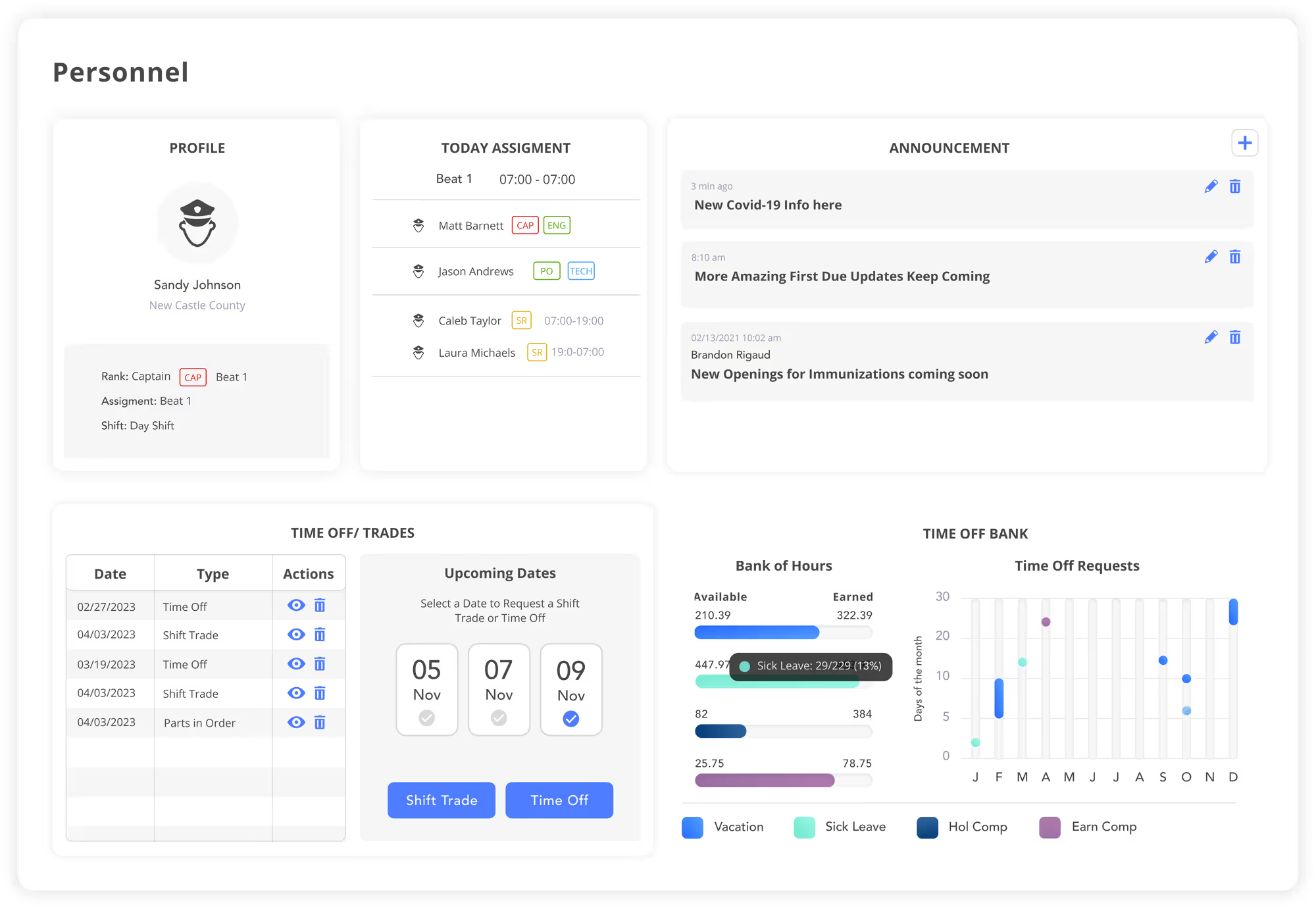
Vacancies and coverage levels are monitored continuously. When a shift opens, automated call shifts notify eligible personnel based on rank, qualifications, seniority, and departmental requirements. Shifts are filled promptly and consistently.
Empower Officers with Self Service Scheduling
With First Due’s Job Board, officers can view schedules, claim overtime shifts, trade shifts, and request off duty details with full transparency. This reduces administrative back and forth and gives personnel more control over their schedules.
Simplify Off Duty, Special Assignments and Events
Off duty jobs, special events, and training assignments are managed in the same system as regular shifts. Leadership gains complete oversight without relying on separate tools or manual tracking.
Real Time Staffing Insight
Supervisors and command staff can see live staffing levels across every unit, shift, district, specialty, or event. This supports proactive planning and clear operational awareness.
Built In Compliance
FLSA rules, union agreements, departmental policies, and staffing requirements are applied automatically. Compliance is enforced consistently without manual intervention.
The Results: Efficiency, Cost Savings, and Improved Work Life Balance
Departments using First Due’s AI driven scheduling platform see immediate benefits.
- More than ten hours per week regained from reduced administrative work
- Lower overtime spending through fair and consistent assignment distribution
- Clear and transparent scheduling for all personnel
- Improved morale due to consistent processes and better visibility
- Confident compliance with FLSA and union regulations
- Connected scheduling, staffing, and reporting in one system
Command staff can shift attention from administrative tasks to leadership and operational priorities.
Why Agencies Choose First Due
First Due provides a unified solution that:
- Eliminates fragmented systems
- Automates complex staffing rules
- Gives officers transparent access to scheduling
- Reduces administrative burden
- Improves fairness and clarity across the organization
- Supports off duty, special events, and overtime in one place
The platform is designed to support agencies of any size, from small departments to large regional organizations with complex staffing structures.
The Path Forward for Law Enforcement Scheduling
AI driven scheduling is becoming a practical and necessary approach for modern workforce management in law enforcement. Agencies that adopt automated tools can reduce administrative strain, improve fairness, control overtime costs, and focus on community service.
First Due provides the clarity, consistency, and adaptability required for today’s operational environment while removing the manual processes that create inefficiency and frustration.
Scheduling in law enforcement is a demanding and highly detailed process. Departments must coordinate 24/7 coverage, minimum staffing levels, training requirements, overtime, and specialized assignments while maintaining fairness, compliance, and efficiency.
Many agencies rely on disconnected tools to manage these essential tasks. Shifts are organized in spreadsheets. Overtime is handled through separate systems. Off duty requests often move through paper forms or email chains. Labor rules, staffing policies, and union contracts sit in long PDF documents that are rarely applied consistently in day to day scheduling.
These fragmented processes create staffing gaps, compliance risks, frustrated officers, and unnecessary administrative workload for command staff.
Modern policing benefits from a unified and automated approach.
The Scheduling Challenges Facing Law Enforcement Today
Fragmented Systems
When shift scheduling, overtime, off duty details, and training assignments exist in separate systems, no one has complete visibility into staffing. This leads to confusion, missed information, and frequent last minute efforts to fill vacancies.
Manual Rule Interpretation
Departments often have lengthy staffing policies, complex SOPs, and multi page union agreements that must be followed precisely. First Due has seen staffing policies that span more than twenty six pages. Attempting to interpret and apply these manually increases the chance of mistakes, grievances, and unnecessary overtime.
Limited Transparency for Officers
Officers often have minimal insight into available shifts, overtime opportunities, or potential shift trades. Phone calls, texts, and emails are still common, which slows processes and reduces fairness and clarity.
High Compliance Burden
Departments must apply seniority rules, FLSA requirements, qualifications, and union mandates consistently. When this process depends on manual review, it becomes error prone, time consuming, and difficult to audit.
Lack of Real Time Visibility
Without a centralized view of staffing, supervisors and command staff cannot easily track coverage across units, districts, or specialty roles. This makes it difficult to anticipate shortages or prepare effectively for events.
These challenges increase administrative workload, raise overtime costs, and divert attention from operational leadership.
Introducing First Due: AI Powered Scheduling Built for Law Enforcement
First Due brings scheduling, overtime, off duty assignments, training coordination, time tracking, and policy automation into one connected platform. Developed with direct feedback from law enforcement agencies, the system uses artificial intelligence to eliminate manual scheduling work and ensure accuracy, fairness, and compliance.
Let AI Handle the Rules
First Due ingests departmental policies, SOPs, and union contracts, then automatically applies them to scheduling decisions. This removes the need for manual rule building and reduces errors. If a policy specifies certain units, personnel, or qualifications should be prioritized, the system can apply those rules directly based on your documentation.
Automate Staffing and Availability
Vacancies and coverage levels are monitored continuously. When a shift opens, automated call shifts notify eligible personnel based on rank, qualifications, seniority, and departmental requirements. Shifts are filled promptly and consistently.
Empower Officers with Self Service Scheduling
With First Due’s Job Board, officers can view schedules, claim overtime shifts, trade shifts, and request off duty details with full transparency. This reduces administrative back and forth and gives personnel more control over their schedules.
Simplify Off Duty, Special Assignments and Events
Off duty jobs, special events, and training assignments are managed in the same system as regular shifts. Leadership gains complete oversight without relying on separate tools or manual tracking.
Real Time Staffing Insight
Supervisors and command staff can see live staffing levels across every unit, shift, district, specialty, or event. This supports proactive planning and clear operational awareness.
Built In Compliance
FLSA rules, union agreements, departmental policies, and staffing requirements are applied automatically. Compliance is enforced consistently without manual intervention.
The Results: Efficiency, Cost Savings, and Improved Work Life Balance
Departments using First Due’s AI driven scheduling platform see immediate benefits.
- More than ten hours per week regained from reduced administrative work
- Lower overtime spending through fair and consistent assignment distribution
- Clear and transparent scheduling for all personnel
- Improved morale due to consistent processes and better visibility
- Confident compliance with FLSA and union regulations
- Connected scheduling, staffing, and reporting in one system
Command staff can shift attention from administrative tasks to leadership and operational priorities.
Why Agencies Choose First Due
First Due provides a unified solution that:
- Eliminates fragmented systems
- Automates complex staffing rules
- Gives officers transparent access to scheduling
- Reduces administrative burden
- Improves fairness and clarity across the organization
- Supports off duty, special events, and overtime in one place
The platform is designed to support agencies of any size, from small departments to large regional organizations with complex staffing structures.
The Path Forward for Law Enforcement Scheduling
AI driven scheduling is becoming a practical and necessary approach for modern workforce management in law enforcement. Agencies that adopt automated tools can reduce administrative strain, improve fairness, control overtime costs, and focus on community service.
First Due provides the clarity, consistency, and adaptability required for today’s operational environment while removing the manual processes that create inefficiency and frustration.
%20copy.avif)
.avif)