
Modern Scheduling for Fire and EMS: How AI Supports Crews, Stations, and Operational Readiness

%20copy.avif)

.svg)


Fire and EMS agencies rely on consistent staffing to keep apparatus in service and crews ready to respond. Coordinating that staffing is becoming more demanding every year. Departments must account for rotating schedules, specialty team assignments, minimum staffing levels, certifications, mandatory callbacks, overtime distribution, and contractual requirements, often across multiple stations and diverse service areas.
Many departments try to manage all of this through a mix of spreadsheets, whiteboards, shared drives, and message threads. Shift trades move through text chains. Certifications are tracked in separate systems. Overtime requests arrive through email. Policies and labor agreements live in lengthy documents that are rarely referenced during daily staffing decisions.
This disjointed approach adds unnecessary complexity to a job that already requires careful coordination. Crews get frustrated by uncertainty and last minute adjustments. Leaders lose hours each week reconciling information from multiple sources. The result is higher overtime, more callbacks, and fewer hours spent focused on response, training, and station operations.
Departments are looking for a connected system that supports the entire workforce and reduces manual scheduling work.
The Scheduling Pressure Points for Fire and EMS
High Variability in Staffing Needs
Fire and EMS rarely have the same staffing profile from day to day. Weather events, major incidents, training blocks, sick leave, and special assignments can shift personnel needs within minutes. Manual systems struggle to keep up with rapid operational changes.
Complex Staffing Models
Departments often run platoon schedules, twenty four hour shifts, Kelly days, rotating days off, and seasonal staffing adjustments. On top of this, minimum staffing requirements differ across stations, apparatus types, and unit designations. Manual coordination increases the chance of misalignment and uneven coverage.
Skill and Certification Driven Assignments
Paramedic levels, apparatus driver qualifications, hazmat certifications, rescue tech credentials, and team assignments all factor into appropriate staffing. Tracking these manually makes it easy to overlook required skills or accidentally place personnel in roles they cannot fill safely.
Callback and Overtime Strain
Calls for overtime or staffing support often require dozens of messages or repeated attempts to find available personnel. This delays coverage and increases the administrative load on officers and scheduling coordinators.
Limited Visibility for Crews
Firefighters and medics want to understand their schedules, open opportunities, required certifications, and station moves. When that information is scattered, crews feel disconnected and rely more heavily on supervisors to interpret staffing needs.
Departments need a system that respects the complexity of fire and EMS staffing while reducing the daily burden on leaders and crews.
Introducing First Due: AI Driven Scheduling Designed for Fire and EMS Operations
First Due consolidates scheduling, staffing, callbacks, qualifications, leave management, and time tracking into one connected platform. Unlike general workforce tools, First Due is shaped by the realities of fire and EMS operations, providing a structure that reflects stations, apparatus, unit types, and specialty teams.
Automate the Rules That Drive Your Staffing
Departments can upload staffing policies, SOPs, and labor agreements directly into First Due. AI reviews these documents and applies them to every staffing decision without requiring hours of manual setup or rule building. This includes minimum staffing, qualification requirements, rotation logic, unit priorities, and station specific needs.
Maintain Full Coverage Without Constant Intervention
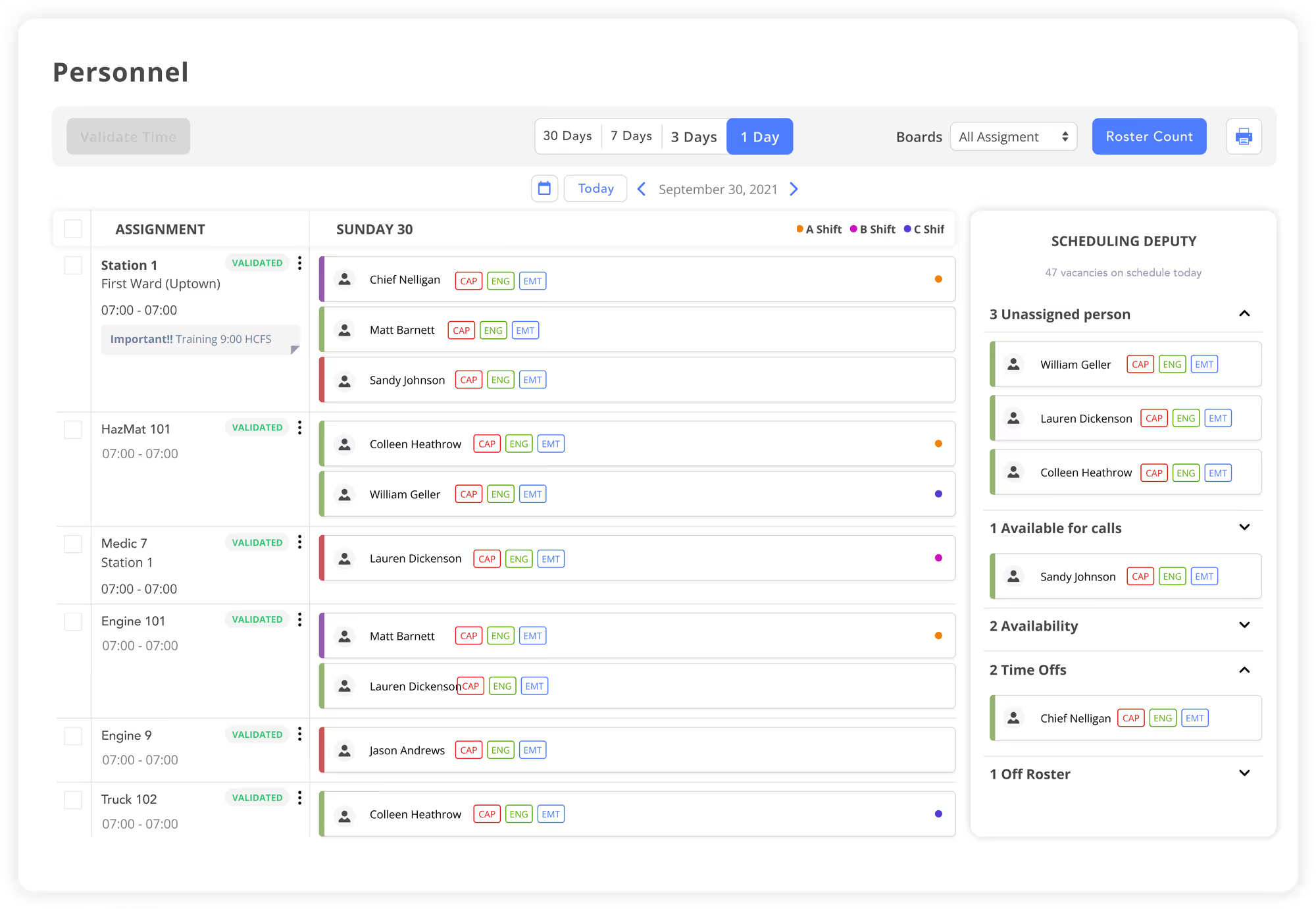
The system monitors staffing levels in real time. When vacancies occur, First Due identifies qualified personnel and fills openings based on rank, certification, location, seniority, and departmental priorities. Apparatus remain ready for service and coverage adjusts quickly when conditions change.
Give Crews Greater Control and Transparency
Firefighters and medics can view their schedules, claim openings, request trades, submit time off, and track credential requirements directly through the First Due Job Board. This reduces unnecessary back and forth and provides personnel with clear visibility into their staffing environment.
Manage Events and Special Assignments in One Place
Wildfire deployment planning, community events, training blocks, standby assignments, and seasonal operations can all be staffed within the same platform used for daily shifts. No additional spreadsheets or separate workflows are required.
Connect Scheduling, Staffing, and Credentials
Leadership can see real-time staffing across every station, apparatus, operational period, and certification category. This unified view supports better planning, more balanced assignments, and improved readiness.
The Impact: Stronger Coverage, Lower Costs, and More Time for Leadership
Agencies that adopt First Due’s scheduling platform see measurable benefits across their organization.
- Significant reduction in manual scheduling and callback work
- Fewer errors in applying staffing policies and qualifications
- More consistent and equitable overtime distribution
- Better crew morale due to clearer communication and transparency
- Lower administrative burden for chiefs, officers, and scheduling staff
- Improved operational readiness through accurate, real time staffing visibility
Departments gain time back for training, planning, operational oversight, and crew support.
Why Departments Choose First Due for Scheduling
First Due supports Fire and EMS in ways that generic scheduling tools cannot.
- Reflects the structure of stations, apparatus, units, and teams
- Handles complex rotations and twenty four hour staffing models
- Automates qualification and certification based assignments
- Simplifies callbacks, overtime, and leave management
- Centers all scheduling functions in one platform used across the agency
- Gives leadership an accurate view of staffing, readiness, and requirements
The platform adapts to departments of all sizes and supports both career and combination models.
The Path Forward for Fire and EMS Workforce Management
AI driven staffing provides agencies with a more reliable and efficient way to manage the coordination required for modern fire and EMS operations. Departments that adopt connected, automated scheduling reduce administrative pressure, control overtime costs, support balanced crews, and improve operational readiness.
First Due gives fire and EMS organizations the tools to stay focused on what matters most: protecting the community and supporting the people who carry out that mission.
Fire and EMS agencies rely on consistent staffing to keep apparatus in service and crews ready to respond. Coordinating that staffing is becoming more demanding every year. Departments must account for rotating schedules, specialty team assignments, minimum staffing levels, certifications, mandatory callbacks, overtime distribution, and contractual requirements, often across multiple stations and diverse service areas.
Many departments try to manage all of this through a mix of spreadsheets, whiteboards, shared drives, and message threads. Shift trades move through text chains. Certifications are tracked in separate systems. Overtime requests arrive through email. Policies and labor agreements live in lengthy documents that are rarely referenced during daily staffing decisions.
This disjointed approach adds unnecessary complexity to a job that already requires careful coordination. Crews get frustrated by uncertainty and last minute adjustments. Leaders lose hours each week reconciling information from multiple sources. The result is higher overtime, more callbacks, and fewer hours spent focused on response, training, and station operations.
Departments are looking for a connected system that supports the entire workforce and reduces manual scheduling work.
The Scheduling Pressure Points for Fire and EMS
High Variability in Staffing Needs
Fire and EMS rarely have the same staffing profile from day to day. Weather events, major incidents, training blocks, sick leave, and special assignments can shift personnel needs within minutes. Manual systems struggle to keep up with rapid operational changes.
Complex Staffing Models
Departments often run platoon schedules, twenty four hour shifts, Kelly days, rotating days off, and seasonal staffing adjustments. On top of this, minimum staffing requirements differ across stations, apparatus types, and unit designations. Manual coordination increases the chance of misalignment and uneven coverage.
Skill and Certification Driven Assignments
Paramedic levels, apparatus driver qualifications, hazmat certifications, rescue tech credentials, and team assignments all factor into appropriate staffing. Tracking these manually makes it easy to overlook required skills or accidentally place personnel in roles they cannot fill safely.
Callback and Overtime Strain
Calls for overtime or staffing support often require dozens of messages or repeated attempts to find available personnel. This delays coverage and increases the administrative load on officers and scheduling coordinators.
Limited Visibility for Crews
Firefighters and medics want to understand their schedules, open opportunities, required certifications, and station moves. When that information is scattered, crews feel disconnected and rely more heavily on supervisors to interpret staffing needs.
Departments need a system that respects the complexity of fire and EMS staffing while reducing the daily burden on leaders and crews.
Introducing First Due: AI Driven Scheduling Designed for Fire and EMS Operations
First Due consolidates scheduling, staffing, callbacks, qualifications, leave management, and time tracking into one connected platform. Unlike general workforce tools, First Due is shaped by the realities of fire and EMS operations, providing a structure that reflects stations, apparatus, unit types, and specialty teams.
Automate the Rules That Drive Your Staffing
Departments can upload staffing policies, SOPs, and labor agreements directly into First Due. AI reviews these documents and applies them to every staffing decision without requiring hours of manual setup or rule building. This includes minimum staffing, qualification requirements, rotation logic, unit priorities, and station specific needs.
Maintain Full Coverage Without Constant Intervention
The system monitors staffing levels in real time. When vacancies occur, First Due identifies qualified personnel and fills openings based on rank, certification, location, seniority, and departmental priorities. Apparatus remain ready for service and coverage adjusts quickly when conditions change.
Give Crews Greater Control and Transparency
Firefighters and medics can view their schedules, claim openings, request trades, submit time off, and track credential requirements directly through the First Due Job Board. This reduces unnecessary back and forth and provides personnel with clear visibility into their staffing environment.
Manage Events and Special Assignments in One Place
Wildfire deployment planning, community events, training blocks, standby assignments, and seasonal operations can all be staffed within the same platform used for daily shifts. No additional spreadsheets or separate workflows are required.
Connect Scheduling, Staffing, and Credentials
Leadership can see real-time staffing across every station, apparatus, operational period, and certification category. This unified view supports better planning, more balanced assignments, and improved readiness.
The Impact: Stronger Coverage, Lower Costs, and More Time for Leadership
Agencies that adopt First Due’s scheduling platform see measurable benefits across their organization.
- Significant reduction in manual scheduling and callback work
- Fewer errors in applying staffing policies and qualifications
- More consistent and equitable overtime distribution
- Better crew morale due to clearer communication and transparency
- Lower administrative burden for chiefs, officers, and scheduling staff
- Improved operational readiness through accurate, real time staffing visibility
Departments gain time back for training, planning, operational oversight, and crew support.
Why Departments Choose First Due for Scheduling
First Due supports Fire and EMS in ways that generic scheduling tools cannot.
- Reflects the structure of stations, apparatus, units, and teams
- Handles complex rotations and twenty four hour staffing models
- Automates qualification and certification based assignments
- Simplifies callbacks, overtime, and leave management
- Centers all scheduling functions in one platform used across the agency
- Gives leadership an accurate view of staffing, readiness, and requirements
The platform adapts to departments of all sizes and supports both career and combination models.
The Path Forward for Fire and EMS Workforce Management
AI driven staffing provides agencies with a more reliable and efficient way to manage the coordination required for modern fire and EMS operations. Departments that adopt connected, automated scheduling reduce administrative pressure, control overtime costs, support balanced crews, and improve operational readiness.
First Due gives fire and EMS organizations the tools to stay focused on what matters most: protecting the community and supporting the people who carry out that mission.
%20copy.avif)


.avif)